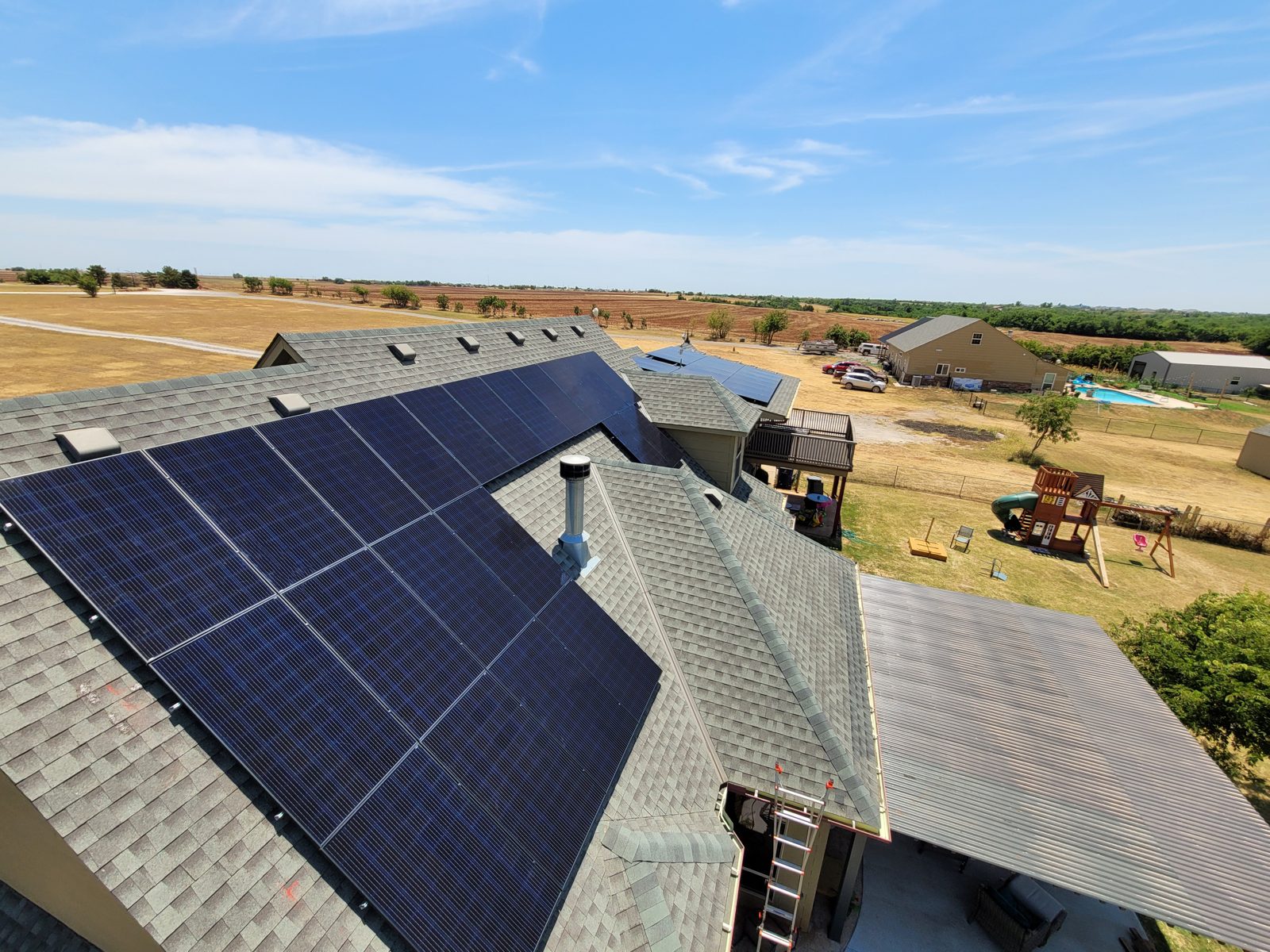
Yes. Oklahoma City has a strong solar resource, comparable to Dallas and well ahead of cities that already have plenty of solar. The reason is simple: solar output depends mostly on sunshine, and Oklahoma gets plenty of it. Here is what modeling from the National Renewable Energy Laboratory shows.
Solar output in Oklahoma City compared with other cities
We ran NREL’s PVWatts calculator (version 8, using the National Solar Radiation Database) on September 27, 2026 for a 1 kW fixed roof-mounted system tilted at 20 degrees facing south, with the calculator’s default system losses of 14%. The results:
- Phoenix, AZ: 1,755 kWh per year
- Oklahoma City, OK: 1,542 kWh per year
- Dallas, TX: 1,506 kWh per year
- Kansas City, MO: 1,433 kWh per year
- Chicago, IL: 1,308 kWh per year
By these numbers, the same system produces about 18% more electricity in Oklahoma City than in Chicago and about 8% more than in Kansas City. It comes in about 12% below Phoenix. These are modeled results for a standard system, not a promise for your roof. Shade, roof direction and equipment all change the outcome.
What that means for a system on your roof
PVWatts estimates that a 1 kW system in Oklahoma City produces roughly 1,542 kWh a year. A larger system scales up in proportion, so a 7 kW system would produce about seven times that figure under the same assumptions. We use a system-specific model for every quote, based on your roof and your electricity usage.
Solar production is only half the story
How much your system saves depends on how Oklahoma utilities credit your production. Power you use as it is produced offsets your retail rate, while excess sent to the grid is credited at the utility’s lower avoided cost. We explain this in our guide to Oklahoma solar tax credits and net metering in 2026.
Oklahoma weather also matters. Hail and high winds are part of life here, which is why equipment quality, mounting and post-storm service matter. See our guide to what to do after hail damages your solar panels.
Get an estimate for your address
We can often estimate a system from your address and the last twelve months of energy use, without visiting first. Request a free estimate or see our residential solar installation service.
Sources
- NREL PVWatts Calculator, version 8 (modeled 1 kW fixed open-rack system, 20 degree tilt, 180 degree azimuth, 14% losses, NSRDB typical meteorological year data; queried September 27, 2026)