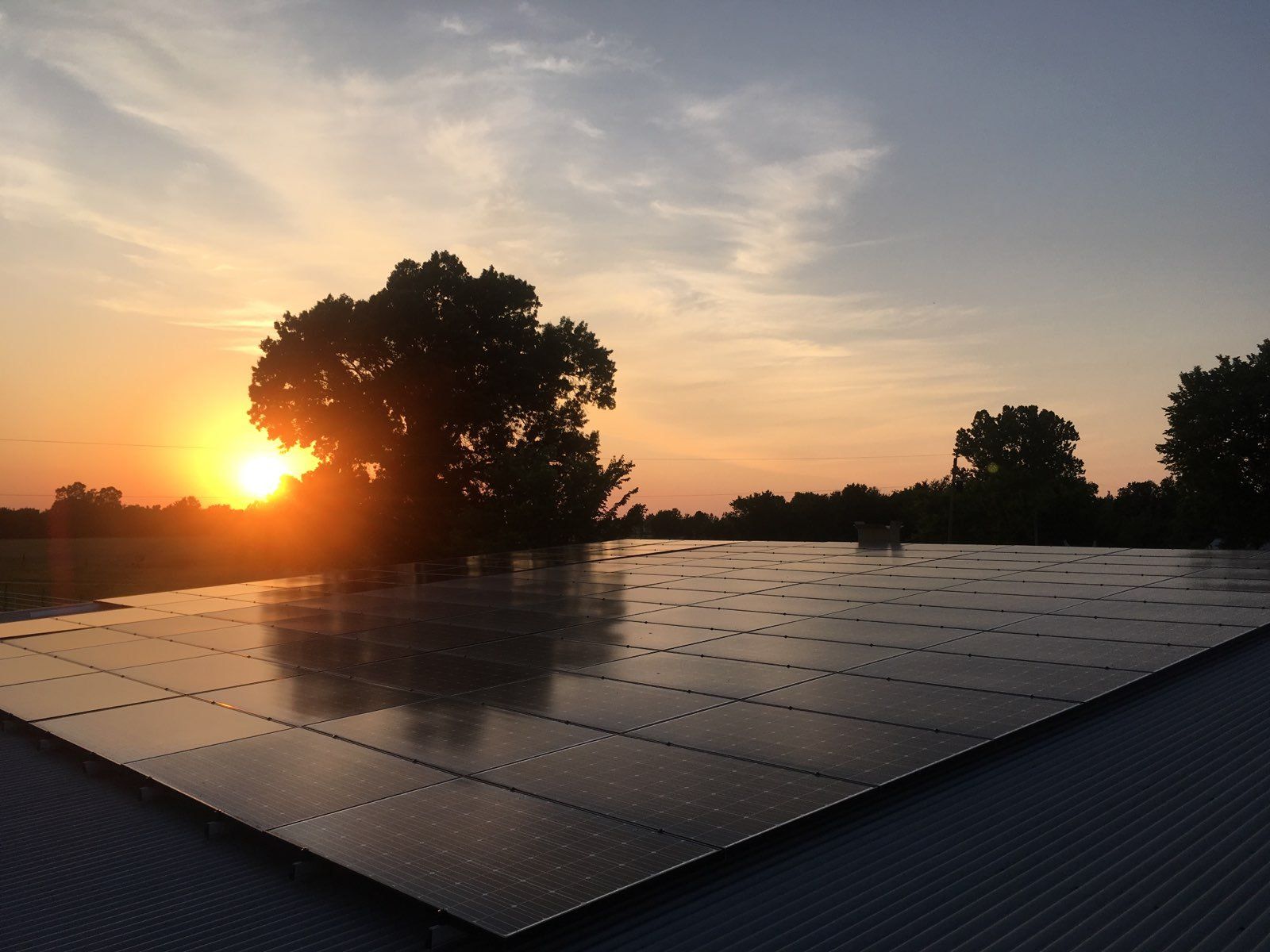
Most solar systems do not keep your lights on when the grid fails. A standard grid-tied system shuts off during an outage, and it takes a battery, plus an inverter set up to use it, to power your home from the sun when the grid is down. If storms regularly knock out power where you live, that is the reason to consider solar battery backup.
Why solar panels alone go dark in an outage
The U.S. Department of Energy explains that grid-connected solar systems are “designed to switch off if the grid power cuts out” for safety reasons. To produce power on their own, DOE says, panels need “a properly configured inverter and a storage system.” New York’s energy agency, NYSERDA, puts it the same way: a grid-connected solar project installed without storage “generally will not have the capability to deliver electricity during an outage.”
The shutoff protects utility line workers from power flowing back into a line they believe is dead. It is a safety feature, not a defect.
What a battery changes
With a battery and a compatible inverter, your system can disconnect from the grid during an outage and keep running the circuits you chose. Solar panels recharge the battery during the day, and the battery supplies power at night or under cloud cover. DOE notes that pairing solar with storage “can help make solar energy available during outages.”
How to size a battery
Two numbers matter, and they are easy to confuse:
- Power in kilowatts (kW) is how much you can run at the same moment.
- Energy in kilowatt-hours (kWh) is how long you can keep running it.
Start by listing what you must keep running: refrigerator, lights, internet, phone chargers, any medical equipment, a sump or well pump, and possibly part of your cooling. Add up their power draw and multiply by the hours you want to cover. As an example, loads averaging 1 kW for 10 hours need about 10 kWh of storage.
For reference, NYSERDA says typical home backup systems are around 10 to 20 kWh. NREL’s modeling for residential storage uses a representative system of 5 kW and 12.5 kWh, about 2.5 hours at full power. Those are planning references, not a recommendation for your house. Air conditioning is the biggest swing factor, since it can draw far more than everything else combined.
Questions to ask any installer
- Which circuits will the battery back up, and can I change that later?
- How many hours will it run my listed essentials, and what happens on a cloudy multi-day outage?
- Will the system work with my existing solar panels and inverter, or does something need to be replaced?
- Who handles permitting, and what does our local building department require?
- What are the battery and inverter warranties, and what are they based on?
Battery backup in Oklahoma
Severe weather is the main reason Oklahomans add storage. If you already have solar, a battery can often be added, and for a new system it can be designed in from the start. We size storage to the circuits you want protected rather than selling the biggest battery available.
Learn more about battery backup installation or request a free estimate. If you are still weighing costs, read how net metering and incentives work in Oklahoma in 2026.